
Passport2Recovery: uniting research, boosting recovery, and empowering global citizen science
Who Professor Karen Burke Da Silva from Passport2Recovery
What Passport2Recovery provides critical insights into Kangaroo Island’s recovery after the 2020 bushfires. It unites 12 research programs in one website and app, including initiatives on native bees, roadkill and koala movements. More than 5,000 tourists from 47 countries have engaged with the program, gaining scientific literacy for future citizen science projects.
Winner of the 2025 Department of Industry, Science and Resources Eureka Prize for Innovation in Citizen Science.
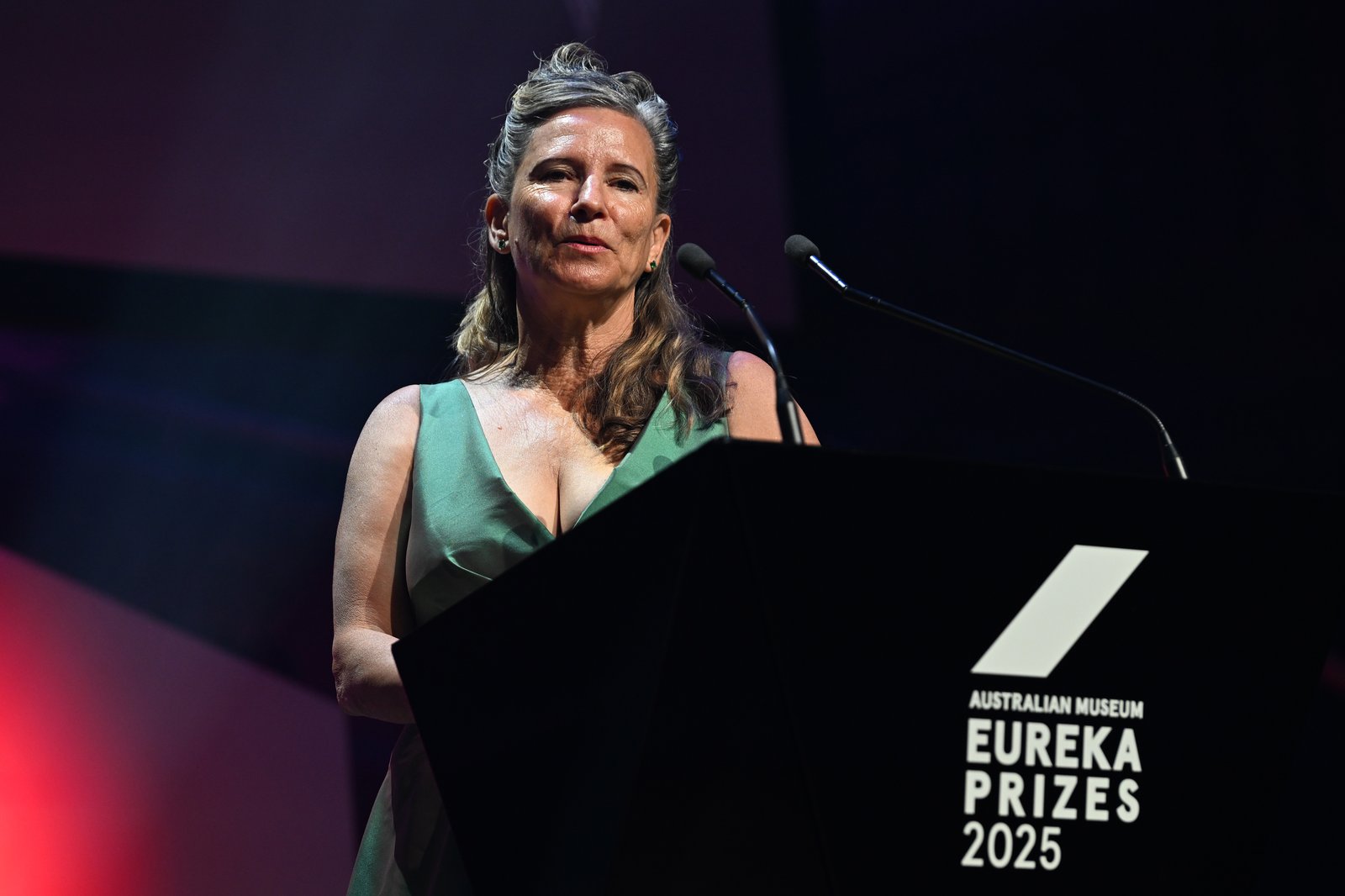
Professor Karen Burke de Silva of Passport2Recovery accepting the 2025 Department of Industry, Science and Resources Eureka Prize for Innovation in Citizen Science. Photo by Getty
Image: Wendell Teodoro/Getty Images for Australian Museum© 2025 Getty Images
Passport2Recovery brings together 12 research programs in one website and app. How do these interact to help build an overall picture of Kangaroo Island’s recovery?
Passport2Recovery integrates 12 research programs through a single website and app, creating a centralised platform for data collection, analysis, and public engagement. Each research program, ranging from koala monitoring and habitat regeneration to fire ecology and citizen science surveys, collects specific ecological, social, or environmental data. By linking these datasets within one platform, the project enables cross-program insights, such as correlating species recovery with vegetation regrowth or community engagement trends.
This integrated approach allows researchers and stakeholders to see the broader patterns of Kangaroo Island’s post-fire recovery in real time. It highlights how different ecological and human factors interact, identifies gaps in recovery, and informs adaptive management strategies. The platform also encourages citizen participation, ensuring that local knowledge and observations contribute to a richer, more complete understanding of the island’s ongoing recovery.
Your citizen science project relies on tourists who come to Kangaroo Island. That seems like a fantastic way to help encourage an awareness of the environment they’re visiting. How did this approach develop?
The citizen science component of Passport2Recovery was designed to harness the natural curiosity and presence of visitors to Kangaroo Island. Following the 2019–2020 bushfires, we recognised that recovery efforts would benefit from widespread monitoring across the island, far beyond what a small team of researchers could achieve alone. Tourists, already exploring the island’s natural environment, offered a unique opportunity to contribute to data collection while deepening their understanding of local ecosystems.
This approach developed through collaboration with tourism operators, conservation groups, and local communities to ensure that participation was simple, engaging, and meaningful. By combining tourism with citizen science, the project encourages visitors to observe, record, and report on wildlife, vegetation, and ecological changes. This not only enhances the research dataset but also fosters an informed, environmentally conscious visitor base who leave with a deeper appreciation of the island’s recovery and conservation needs.
Passport2Recovery is a really collaborative project. Can you share a little about why collaboration is so important, and how it has contributed to the success of the app?
Collaboration is at the heart of Passport2Recovery because post-fire recovery on Kangaroo Island spans multiple ecosystems, species, and community interests. No single organisation or research team can capture the full picture of ecological and social recovery on its own. By bringing together researchers, conservation groups, tourism operators, local communities, and citizen scientists, the project pools expertise, resources, and perspectives.
This collaborative approach has been critical to the success of the app. Each partner contributes unique datasets, tools, and insights, which the app integrates to provide a comprehensive, real-time view of the island’s recovery. Collaboration also ensures that the app is user-friendly, relevant, and scientifically robust, allowing participants, whether tourists, residents, or researchers, to meaningfully contribute to recovery efforts. The resulting synergy has enhanced both the quality of the research and the level of engagement, making Passport2Recovery a model for integrated, place-based citizen science.
“Tourists, already exploring the island’s natural environment, offered a unique opportunity to contribute to data collection while deepening their understanding of local ecosystems.”
What have been some of your most interesting results to date?
Some of the most interesting results from Passport2Recovery highlight both ecological recovery and the impact of community engagement. Ecologically, we’ve observed early signs of vegetation regrowth in key burnt areas and the return of native wildlife, including koalas, kangaroos, and small marsupials, with citizen observations helping to map these changes in unprecedented detail. The project has also enabled monitoring of the snorkel oyster restoration reef, where tracking events such as algal blooms provides important insights into water quality, reef health, and the success of restoration efforts.
From a social perspective, the project has shown the power of citizen science: tourists and locals alike have contributed thousands of observations, demonstrating a strong appetite for meaningful conservation participation. Integrating these contributions has given researchers a more complete and dynamic understanding of Kangaroo Island’s recovery, highlighting how terrestrial and marine ecosystems are responding to post-fire and environmental pressures.
What does the future of Passport2Recovery look like?
The future of Passport2Recovery focuses on continued monitoring and adaptive management over the next few years. We will maintain ongoing data collection across terrestrial and marine ecosystems, including species recovery, vegetation regrowth, and the snorkel oyster restoration reef. As the monitoring period progresses, we will assess which research programs have achieved their objectives and can be concluded, and which should continue to ensure a comprehensive understanding of Kangaroo Island’s recovery.
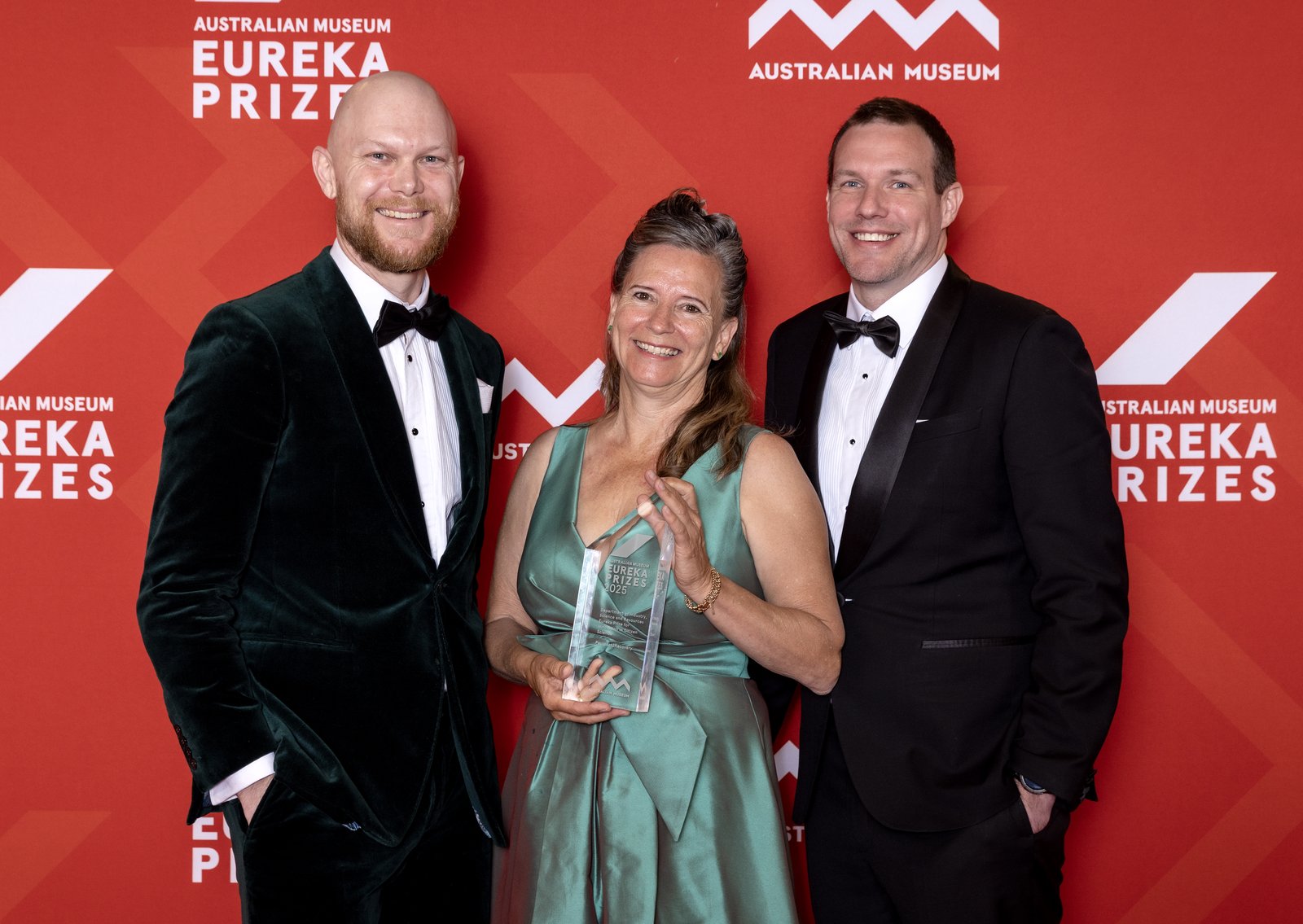
Passport2Recovery at the 2025 Australian Museum Eureka Prizes Award Ceremony. Photo by Mel Koutchavlis
Image: Mel Koutchavlis© Mel Koutchavlis
What does winning a Eureka Prize mean to you?
Winning a Eureka Prize has been an incredibly rewarding experience. After being a finalist in 2024, I felt we may have applied a bit early, but with the increased data and deeper understanding of the projects, we were very happy with our 2025 application and thrilled with the outcome. The award validates the hard work, creativity, and collaboration that has gone into Passport2Recovery, and acknowledges the countless citizen scientists, community members, and partners who have contributed to Kangaroo Island’s recovery.
For me personally, it’s a moment of pride and inspiration, a reminder of what’s possible when research, technology, and community engagement come together to make a tangible difference. It also highlights the importance of showcasing Kangaroo Island as a unique destination, encouraging tourism that supports both the local economy and ongoing conservation efforts.
The Australian Museum Eureka Prizes are the country’s most comprehensive national science awards, honouring excellence across the areas of research & innovation, leadership, science engagement, and school science.
