
FrogID Dataset 7.0 - Seven years of data, and over 1 million records
Over 1 million records are now available online and open-access for researchers and conservationists to learn more about Australia’s frogs!
Frogs are one of the most threatened groups of animals globally, and Australia’s frogs are no exception. Australia has 259 native species, and 1 in 5 are threatened with extinction.
The best way for scientists to protect these vulnerable animals, and plan conservation efforts is to know where they are occurring, and how they’re responding to changes in their environment over time.
By incorporating frog occurrence data from citizen science projects such as FrogID, we’re rapidly improving our understanding of Australia’s frogs.
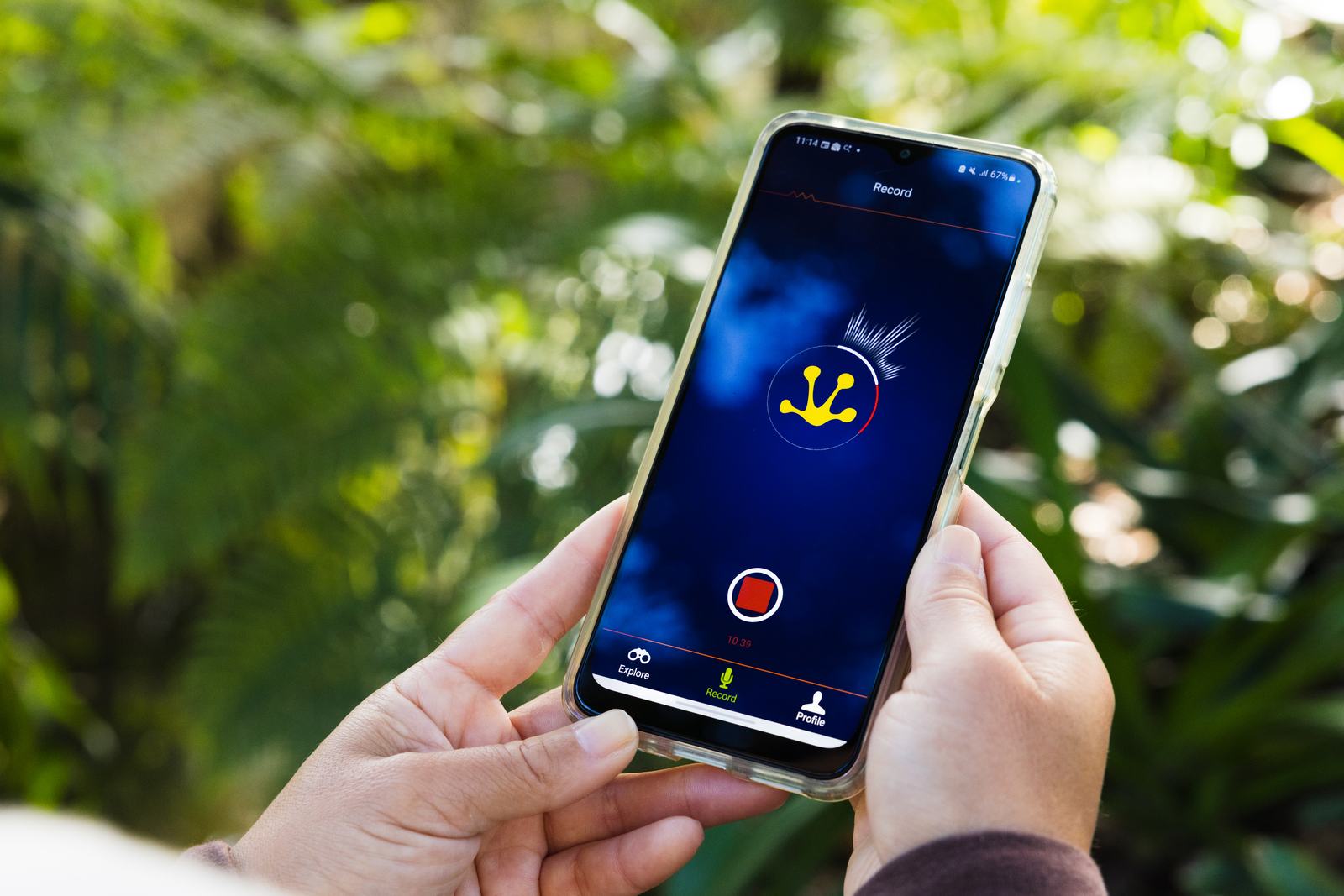
Using the FrogID app to record frog calls.
Image: Louise Reily© Australian Museum
Now, we’re releasing the 7th annual FrogID dataset, which covers the first seven years of the project – from November 2017 to November 2024.
Nearly 45 thousand people have contributed recordings of calling frogs to the FrogID dataset 7.0, which contains over 1 million records of 228 species, including the introduced Cane Toad (Rhinella marina).
That’s 88% of all known Australian frog species!
Similar to previous years, the Common Eastern Froglet (Crinia signifera) is living up to its name, and takes the top spot as the most commonly recorded frog in the FrogID 7.0 dataset, with over 219,000 records of this one species.
We’re also excited to be including the first confirmed FrogID records of the Tanami Toadlet (Uperoleia micromeles) in the FrogID dataset 7.0! This frog is only found in central Western Australia and the Northern Territory, so we’re very excited to be seeing more FrogID users recording these rarely-recorded species in remote locations.
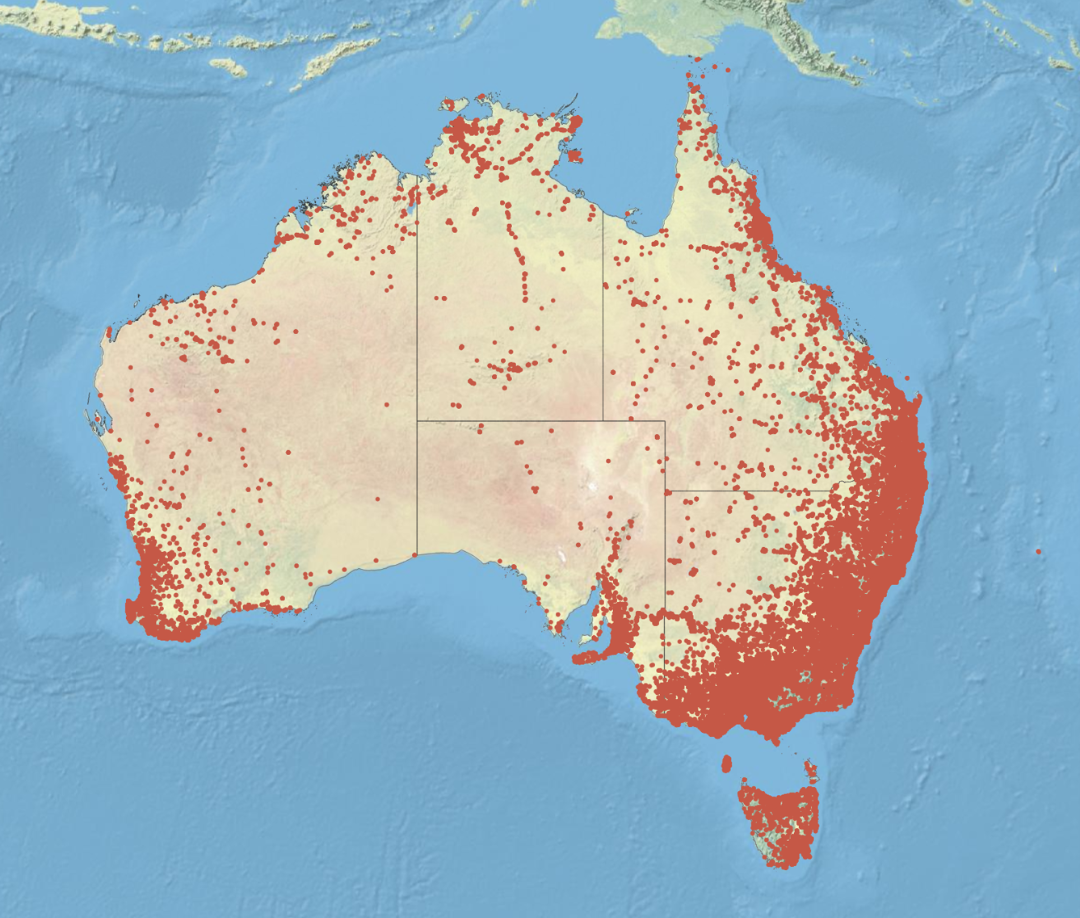
© Australian Museum
The complete FrogID dataset 7.0 contains thousands of records of threatened species, from just three records of the Critically Endangered Mt Elliot Nursery Frog (Cophixalus mcdonaldi) to over 2,600 records of the tiny Endangered Sloane’s Froglet (Crinia sloanei). Following ethical data publication guidelines, we consider certain frog species, most of which are threatened, as ‘sensitive’ species, and the exact locality of these species is buffered to 0.1 decimal degrees (about 11km).
Very highly threatened frog species recorded via FrogID, such as the Critically Endangered White-bellied Frog (Anstisia alba) are not included in the public dataset. This is a tiny fraction of the dataset – just over 600 records - and the exact locality data for all sensitive species is provided to state biodiversity atlases to help inform conservation. They can also be requested from the FrogID project directly.
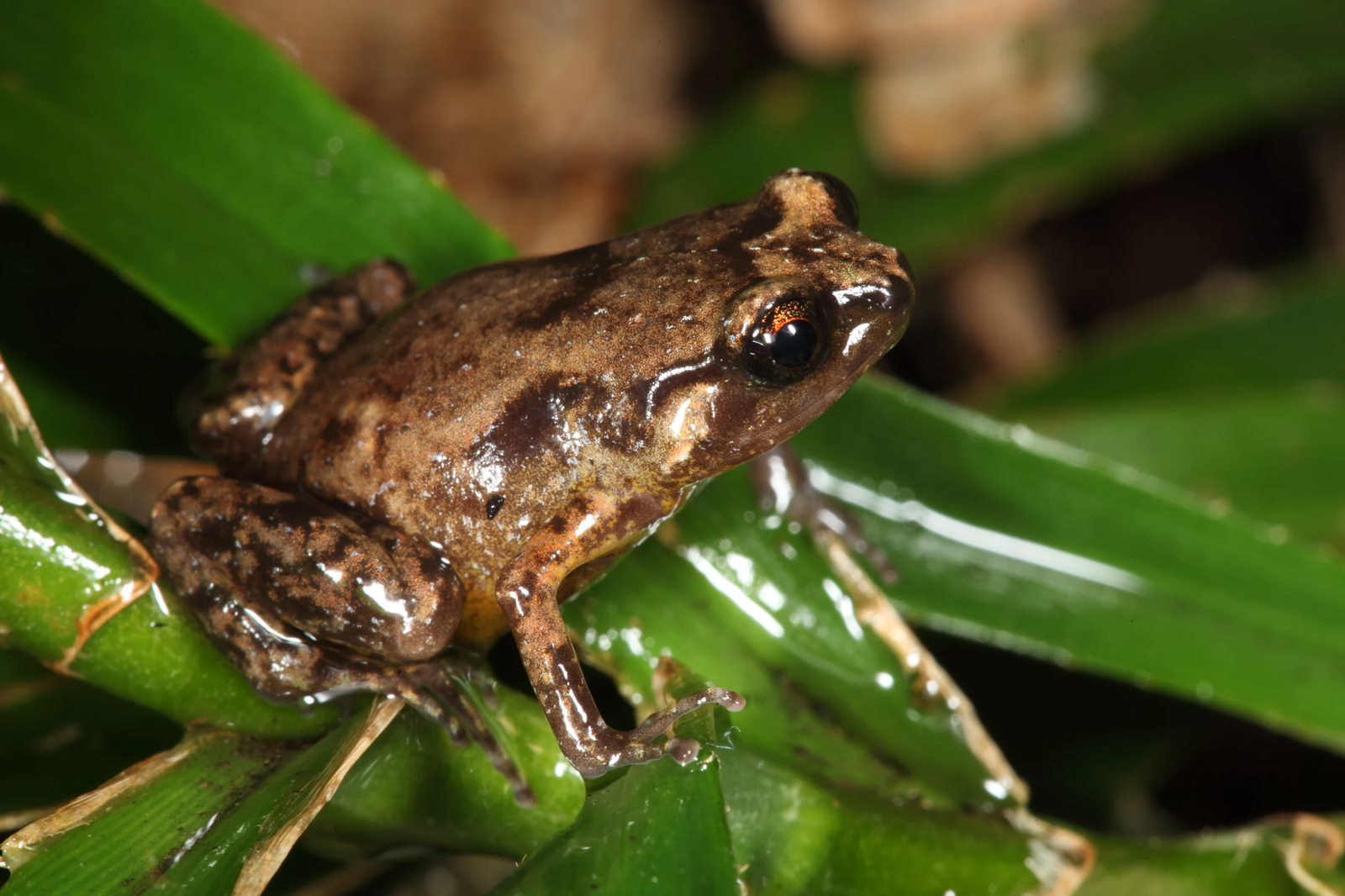
The sensitive FrogID dataset 7.0 contains the first FrogID records of the Critically Endangered Mt Elliot Nursery Frog (Cophixalus mcdonaldi).
Image: Stephen Mahony© Australian Museum
The FrogID dataset is a rapidly growing each year, and is the largest contributor of frog occurrence records to the national biodiversity database, the Atlas of Living Australia.
This resource is available to be used by scientists, government, land-managers, and people passionate about Australia’s frogs.
Since 2017, FrogID data has contributed to over 30 scientific papers exploring frog ecology, taxonomy, and conservation, including in the formal description of 13 species as new to science. Within the last year alone, FrogID data has revealed new insights into the impacts of flooding events on frogs, and the importance of private lands for threatened frog species.
While FrogID records currently cover nearly 44% of the country, we’re encouraging FrogID users to help us achieve our aim of more than 50% coverage, using our spatial coverage map to see which areas of the country are underrepresented in FrogID.
We thank all of the FrogID users who have contributed recordings to the project, who are truly helping to put frogs on the map.
Grace Gillard, Technical Officer, Herpetology, Australian Museum Research Institute
Primary citation for FrogID data
Rowley JJL, & Callaghan CT (2020) The FrogID dataset: expert-validated occurrence records of Australia’s frogs collected by citizen scientists. ZooKeys 912: 139-151.
More information
- Explore data through the FrogID website
- Data published through Atlas of Living Australia
- Other FrogID publications
Acknowledgements
We would like to thank the Citizen Science Grants of the Australian Government and the Impact Grants program of IBM Australia for providing funding and resources to help build the initial FrogID App; the generous donors who have provided funding for the project; the Museum and Art Gallery of the Northern Territory, Queensland Museum, South Australian Museum, Tasmanian Museum and Art Gallery, and Western Australian Museum as FrogID partner museums; the many Australian Museum staff and volunteers who make up the FrogID team; and, most importantly, the thousands of citizen scientists across Australia who have volunteered their time to record frog calls with FrogID.
